Spring Facials: Resurfacing Winter-Damaged Skin

If you’ve made it through an Albany winter and your skin is looking at you like it has some notes (dull, flat, reactive, dry in some places and weirdly congested in others) that’s not in your head. Winter here isn’t a gentle season. It’s months of indoor heating that strips every drop of humidity from the air, wind that dismantles your skin barrier on the way to the parking lot, and temperatures that slow cellular turnover to a crawl while your face is somehow expected to look alive.
The facial treatment that makes sense right now isn’t a quick hydration boost. It’s a proper seasonal reset, the kind that actually addresses what winter did to your skin from the surface down. A medical-grade facial built for this moment doesn’t just hydrate the layer you put moisturizer on. It deals with the real situation underneath.
Let’s Be Honest About What Winter Actually Did
Most conversations about winter skin stop at “it’s dry.” That’s the least interesting part of what happened.
Here’s the fuller picture. When cold air holds almost no moisture and indoor heating removes whatever the outside didn’t, the skin’s barrier, the lipid matrix that keeps water in and irritants out, degrades over time. A barrier that’s been compromised for five months isn’t just dry. It’s structurally less capable of doing its job. It lets moisture escape faster than it retains it. It lets irritants in that it would normally deflect. And it becomes more reactive and sensitive in ways that tend to surprise people who don’t usually have sensitive skin.
On top of that, cell turnover slows in winter. The skin produces new cells at a reduced rate, which means dead cells accumulate on the surface for longer than they normally would. The result isn’t just dullness, it’s a physical barrier between your skin and everything you’re putting on it. Every serum, every moisturizer, every treatment product you’ve been applying since November has been fighting through that layer. Some of it got through. A lot of it didn’t.
And then there’s the inflammation. Cold and dry conditions create low-grade inflammatory signals in the skin that -sustained over months- contribute to redness, congestion, and worsened sensitivity in ways that don’t disappear when March arrives just because the temperature improved.
This is the situation a medical-grade facial designed for seasonal resurfacing is actually addressing. Not just the surface. The whole accumulated reality of what winter does when you live somewhere winter takes seriously.
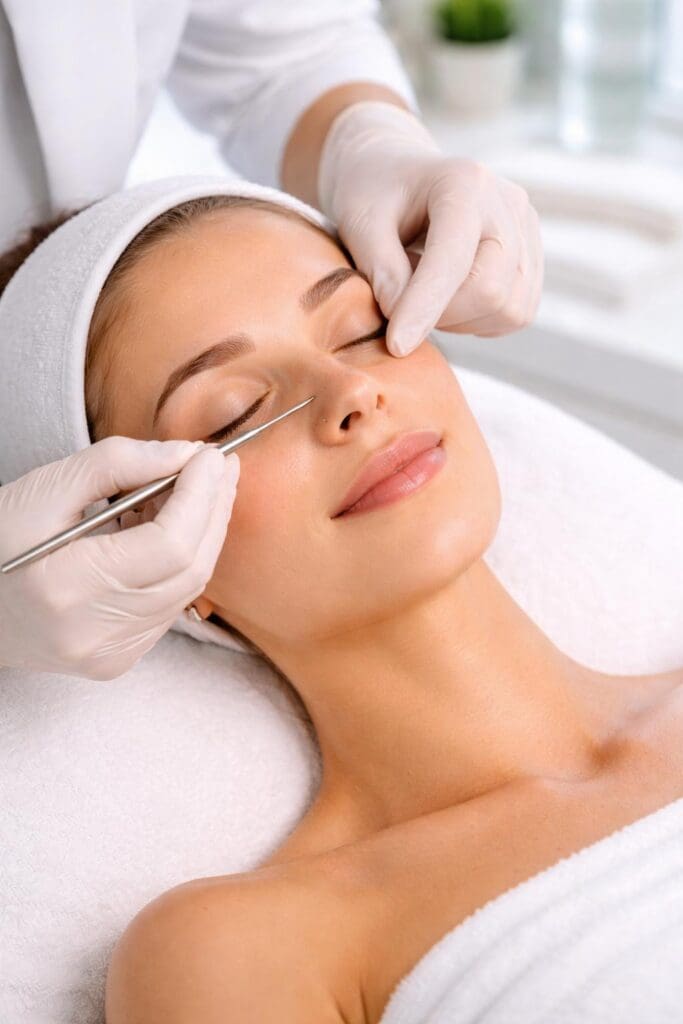
What “Resurfacing” Actually Means — and Why It’s the Right Word
Resurfacing is clinical language for something straightforward: removing what’s built up on top of the skin so that what’s underneath — and what you apply afterward — can finally work.
A standard moisturizing facial tries to add hydration to a surface that is currently the problem. It’s like trying to water a garden through six inches of mulch. A deep cleansing facial built for seasonal resurfacing clears the mulch first, then waters the garden. That sequence completely changes what’s possible in a single session — and more importantly, it changes what your skincare routine is capable of producing in the weeks afterward, because the barrier is clear and the skin can finally absorb what you’re putting on it.
The clinical structure of a resurfacing facial matters more than most people realize. It’s not just exfoliate-moisturize-mask. It’s a layered intervention: clear the accumulated surface, repair the barrier, address the specific damage, seal everything in with protection. Each step enables the next, and skipping or shortchanging any of them produces a fraction of the result.
How a Vigour Spring Facial Is Built — And What Makes It Actually Customized
The word “customized” has been used so often in aesthetics that it’s basically stopped meaning anything. Here’s what it actually means at Vigour: your provider reads your specific skin before touching it, and the treatment that follows is a response to what they found — not a spring menu applied uniformly to everyone who books in March.
Here’s what that looks like in practice:
- Real skin assessment first. Not a quick look. A genuine read of texture, hydration levels, congestion, redness, and any visible signs of barrier compromise — because all of those factors determine what exfoliation method is appropriate, how aggressive treatment can safely be, and which actives the skin is ready to receive.
- Exfoliation calibrated to your barrier. Winter-damaged skin that’s already inflamed and barrier-compromised does not need the most aggressive resurfacing available. A deep cleansing facial at this stage means the right kind of clearing — enough to remove accumulation without triggering additional reactivity. That distinction requires clinical judgment, not a standard protocol.
- Extractions where they’re warranted. Post-winter congestion is extremely common — closed comedones and clogged pores that formed when oily skin overcompensated for dryness, or when heavier winter products sat on the surface longer than they should. Professional extractions clear this without trauma.
- Active serums matched to what your skin actually needs. This is where the customized facial piece is most visible. Hyperpigmentation left by winter inflammation gets a brightening protocol. Dehydrated, barrier-depleted skin gets layered hyaluronic acid with ceramide repair. Rosacea-prone or red skin gets a calming, niacinamide-forward approach that reduces inflammation before anything more active is introduced. Your skin’s state dictates the actives — not the season.
- Barrier repair to close. The clinical facial ends by restoring what exfoliation disrupted — sealing the cleared skin with a protective, fragrance-free finish that gives the barrier everything it needs to rebuild and hold onto what was just delivered.
The difference between this and a spa facial is the difference between a treatment that responded to your skin and one that was performed on it.
The Signs That Your Skin Has Been Waiting for This
Some people know immediately they need a reset. Others have been quietly adapting to what they’re assuming is just winter, without realizing how significantly their skin has shifted. A few patterns worth paying attention to:
Your moisturizer stopped feeling effective sometime in January and you’ve been layering more products on top without seeing results — a classic sign of accumulation blocking absorption. Makeup isn’t sitting the way it should — settling into texture, looking cakey, requiring more than usual — which is almost always a dead cell accumulation problem. Breakouts appeared in areas you don’t usually break out, particularly forehead or cheeks, which often signals congestion from barrier disruption and heavier product use. Redness or sensitivity increased during winter and hasn’t fully resolved even now that temperatures have improved. Fine lines look more pronounced than they did in October, not because you aged dramatically, but because severely dehydrated skin shows texture that properly hydrated skin would not.
Any of these individually is worth addressing. All of them together means your skin has been managing winter’s damage for months and is ready for a genuine intervention.
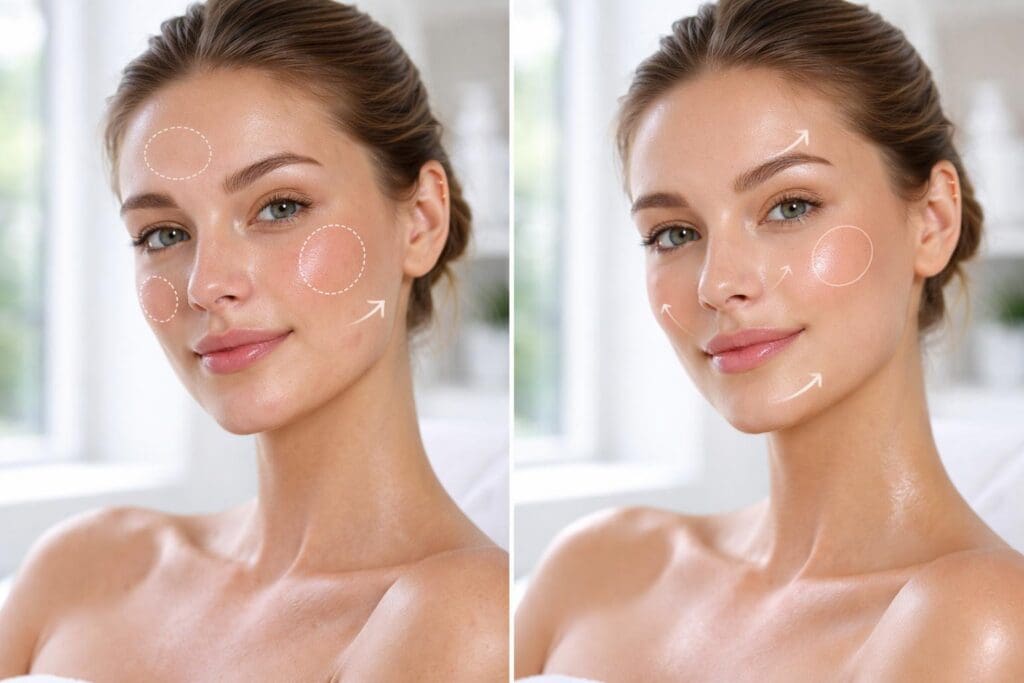
Why Timing This Right Matters Beyond Just the Immediate Result
There’s a compound argument for doing this now rather than waiting: the skin you reset in March or April is the skin that enters summer in a genuinely resilient state. Skin that’s been properly exfoliated, barrier-repaired, and loaded with antioxidants before UV exposure increases is measurably more resistant to sun damage than skin carrying its winter backlog into warm weather. Photodamage accumulates faster on compromised skin. Hyperpigmentation worsens more quickly. The opportunity cost of waiting past spring is real.
Two or three clinical facial sessions between now and June — spaced far enough apart to let the barrier stabilize between treatments — is the difference between arriving in summer with your skin actually working and spending summer still catching up.
Your Skin Carried Winter. Now Let It Put It Down.
At Vigour Aesthetics + Wellness in Albany, NY, we’re not going to hand you a seasonal menu and tell you to pick something. We’re going to look at your skin, understand what winter actually did to it, and build the facial treatment that addresses that specifically. Because your skin didn’t have a generic winter, it had your winter, in your skin, with your particular history. And the reset it needs is built around that. Book your spring facial consultation at Vigour and let’s actually deal with it.